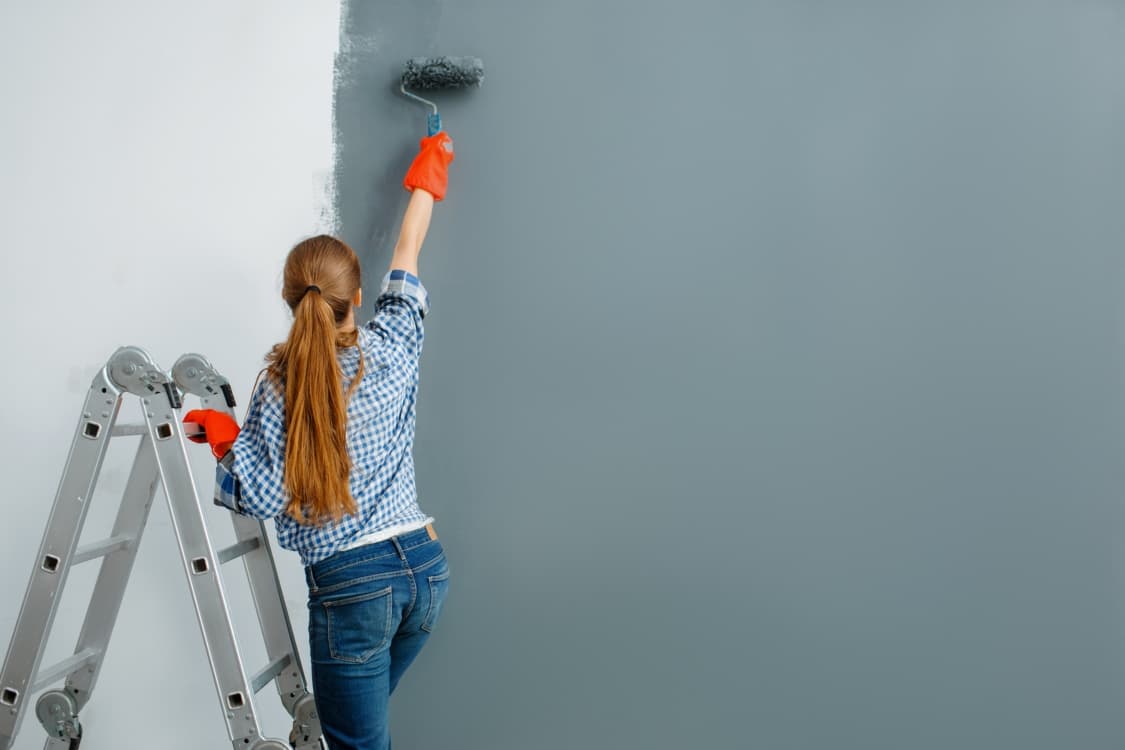
Concrete is one of the harder residential exterior surfaces to paint well. It's porous, chemically reactive, and moisture-sensitive. Skip the prep steps and your paint job fails within 12-24 months. Do it right and paint on concrete lasts 5-10 years. Here's what Princeton, Wylie, Allen, and Rockwall homeowners should understand.
Why concrete paint fails
The Painting and Decorating Contractors of America tracks the top reasons exterior paint fails on masonry and concrete substrates. The list is short and consistent:
- Moisture in the substrate at application time
- Efflorescence (soluble salts wicking up from within the slab)
- Improper cleaning
- Wrong paint chemistry for the substrate
- Application in wrong conditions
The porosity problem
The Portland Cement Association puts hardened concrete porosity at 12-15%. Paint applied to porous concrete has to fill and adhere to those pores or it will lift under moisture and temperature cycling. Local Concrete Contractor's slab-on-grade thickness guide covers how substrate quality affects long-term durability — the same principles that affect slab life also affect how well any coating adheres to it.
Step 1: Clean thoroughly
Concrete must be free of:
- Dirt, dust, and organic residue
- Oil, grease, and hydrocarbon staining
- Existing loose paint, sealer, or curing compound
- Efflorescence and mineral deposits
Pressure washing at appropriate pressure (2000-3000 PSI, per techniques covered by professional cleaning associations) plus targeted degreasers handles most contamination.
Step 2: Etch or profile the surface
New or smooth concrete needs surface profile — mechanical roughness that lets paint mechanically grab the substrate. Options:
- Muriatic acid etch (10% dilution, followed by neutralization)
- Sodium bifluoride etch (safer chemistry, slower)
- Shot blasting (professional, mechanical)
- Diamond grinding (heavy-duty)
The International Concrete Repair Institute publishes guidelines on surface profile evaluation (SP-1 through SP-9) that professional painters and coatings applicators reference.
Step 3: Test for moisture
Concrete carries internal moisture. Painting over wet concrete traps that moisture, which then blows off the paint from underneath. Test methods:
- ASTM F1869 (calcium chloride test)
- ASTM F2170 (relative humidity probe)
The ASTM International standards for concrete moisture testing are the industry benchmark — professionals should be measuring before coating.
Step 4: Test for pH
New concrete is alkaline (pH 12-14). Many paints don't perform well on alkaline substrates. Fresh concrete typically needs to cure 28+ days before painting; pH drops to 10-12 as it does. For older concrete, spot-test with pH strips.
Step 5: Primer selection
Match primer to conditions:
- New concrete: alkali-resistant masonry primer
- Weathered concrete: bonding primer
- Moisture-prone: moisture-tolerant primer
- Previously painted: adhesion-promoting primer over sound existing coating
Step 6: Environmental conditions
Ideal painting conditions:
- 50-90°F ambient
- Substrate temperature 5°F+ above dew point
- Less than 85% humidity
- No rain forecast for 24-48 hours
- Not in direct hot sun
Efflorescence: the recurring nightmare
Efflorescence is soluble salts wicking through concrete and depositing on the surface. Painting over active efflorescence just creates a moisture and salt trap under the paint. Fix requires:
- Removing existing efflorescence (mechanical scrub or dilute acid)
- Identifying and eliminating the moisture source
- Allowing complete drying
- Then coating
The U.S. EPA mold program covers related moisture management principles that also apply to painted exterior surfaces.
Common surfaces and appropriate paint systems
- Stucco: Elastomeric masonry paint for movement accommodation
- Poured foundations: Waterproofing masonry paint for below-grade exposure
- Retaining walls: Elastomeric or acrylic masonry paint
- Concrete block: Block filler primer + elastomeric topcoat
- Cementitious siding: Standard exterior acrylic (usually pre-primed)
Environmental compliance
Exterior masonry paints have specific VOC limits per federal and state regulations. Low-VOC and zero-VOC formulations are increasingly available and often required. Green Seal certification and comparable third-party VOC certifications simplify product selection.
What to skip
- Skip painting concrete cured less than 28 days
- Skip painting over active efflorescence
- Skip painting without moisture testing on horizontal concrete
- Skip low-quality paint on high-exposure surfaces
- Skip application in the wrong conditions
Proper prep is 60% of a durable concrete paint job. Skip it and the paint job fails within a year — regardless of paint quality. Do it right and paint on concrete lasts a decade with minimal maintenance.
Allen Painting Team
Our expert team has been serving Allen and surrounding areas for over 12+ years, completing 500++ projects. We share our industry knowledge to help homeowners make informed decisions.